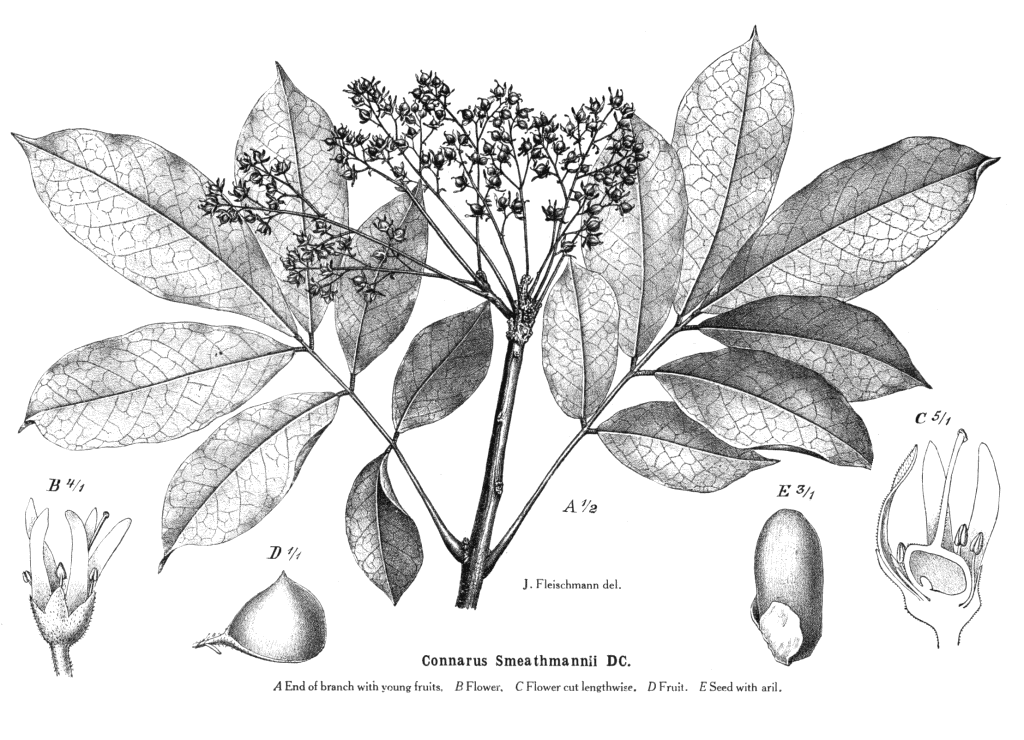
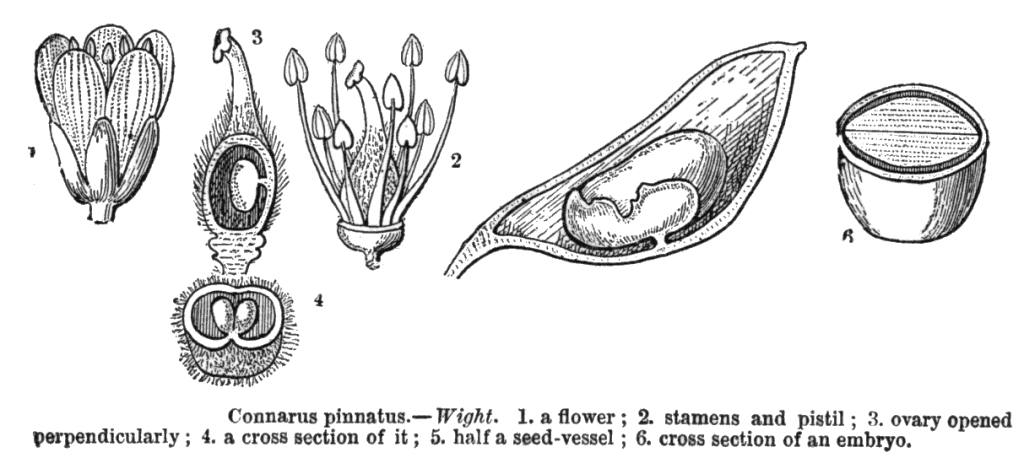
Habit and leaf form. Trees, or shrubs, or lianas (commonly). Self supporting, or climbing; climbers stem twiners. Leaves alternate; spiral; leathery; petiolate; non-sheathing; not gland-dotted; compound; unifoliolate, or ternate, or pinnate; exstipulate; without a persistent basal meristem.
Leaf anatomy. Mucilaginous epidermis present, or absent. Stomata paracytic (commonly), or cyclocytic, or diacytic (rarely).
Lamina dorsiventral; with secretory cavities, or without secretory cavities. Secretory cavities containing mucilage.
Stem anatomy. Secretory cavities present, or absent; with mucilage. Cork cambium present; initially superficial. Nodes tri-lacunar to multilacunar. Internal phloem absent. Secondary thickening developing from a conventional cambial ring, or anomalous; when anomalous, via concentric cambia (Rourea). `Included' phloem present (Rourea), or absent. Xylem with libriform fibres; with vessels. Vessel end-walls simple. Wood parenchyma scanty paratracheal (typically, or absent).
Reproductive type, pollination. Hermaphrodite (usually), or dioecious.
Inflorescence, floral, fruit and seed morphology. Flowers aggregated in `inflorescences'; in panicles and in racemes. The terminal inflorescence unit cymose, or racemose (?). Inflorescences terminal, or axillary. Flowers small; regular, or somewhat irregular; 5 merous. Free hypanthium absent. Hypogynous disk present (small), or absent.
Perianth with distinct calyx and corolla; (8-)10; 2 whorled; isomerous. Calyx (4-)5; 1 whorled; polysepalous, or gamosepalous; persistent; imbricate, or valvate; with the odd member anterior (?). Corolla (4-)5; 1 whorled; polypetalous, or gamopetalous; imbricate (usually), or valvate (rarely); regular.
Androecium 10 (usually), or 5. Androecial members free of the perianth; often markedly unequal (the antesepalous members longer); free of one another, or coherent (below); when coherent 1 - adelphous; usually 2 - whorled. Androecium exclusively of fertile stamens, or including staminodes. Staminodes when present, 1-5 (from the inner whorl). Stamens 5-10; isomerous with the perianth, or diplostemonous. Anthers dorsifixed; versatile; dehiscing via longitudinal slits; introrse. Pollen grains aperturate; 3(-4) - aperturate; colpate, or colporate.
Gynoecium 1, or 3, or 5, or 7, or 8 (often 5 with 4 abortive); monomerous, or apocarpous; of one carpel, or eu-apocarpous, or semicarpous (carpels sometimes more or less connate basally); superior. Carpel apically stigmatic; 2 ovuled. Placentation marginal to basal (`marginal', cf. Leguminosae). Ovules ascending; collateral (but one usually abortive); arillate (often), or non-arillate; orthotropous (always?); bitegmic; crassinucellate. Outer integument contributing to the micropyle. Embryo-sac development Polygonum-type. Polar nuclei fusing prior to fertilization. Antipodal cells formed; 3; not proliferating. Endosperm formation nuclear.
Fruit non-fleshy; multiple, or not multiple (often a single follicle). The units coalescing into a secondary syncarp to not coalescent. The fruiting carpel dehiscent, or indehiscent; a follicle, or nucular. Seeds endospermic, or non-endospermic. Endosperm when present, oily.
Seedling. Germination cryptocotylar.
Physiology, biochemistry. Alkaloids absent (one species). Proanthocyanidins present; cyanidin and delphinidin. Flavonols present; kaempferol, quercetin, and myricetin. Ellagic acid absent (Connarus). Saponins/sapogenins absent.
Geography, cytology. Tropical. Pantropical. X = 13 or 14.
Taxonomy. Subclass Dicotyledonae; Crassinucelli. Dahlgren's Superorder Rutiflorae (?); Sapindales. Cronquist's Subclass Rosidae; Rosales. Takhtajan's Subclass Rosidae; Rosanae; Connarales. Species 300-350. Genera 16; Agelaea, Burttia, Cnestidium, Cnestis, Connarus, Ellipanthus, Hemandradenia, Jollydora, Manotes, Pseudoconnarus, Rourea, Vismianthus.
Illustrations. conna243.gif conna468.gif