~ Cornaceae
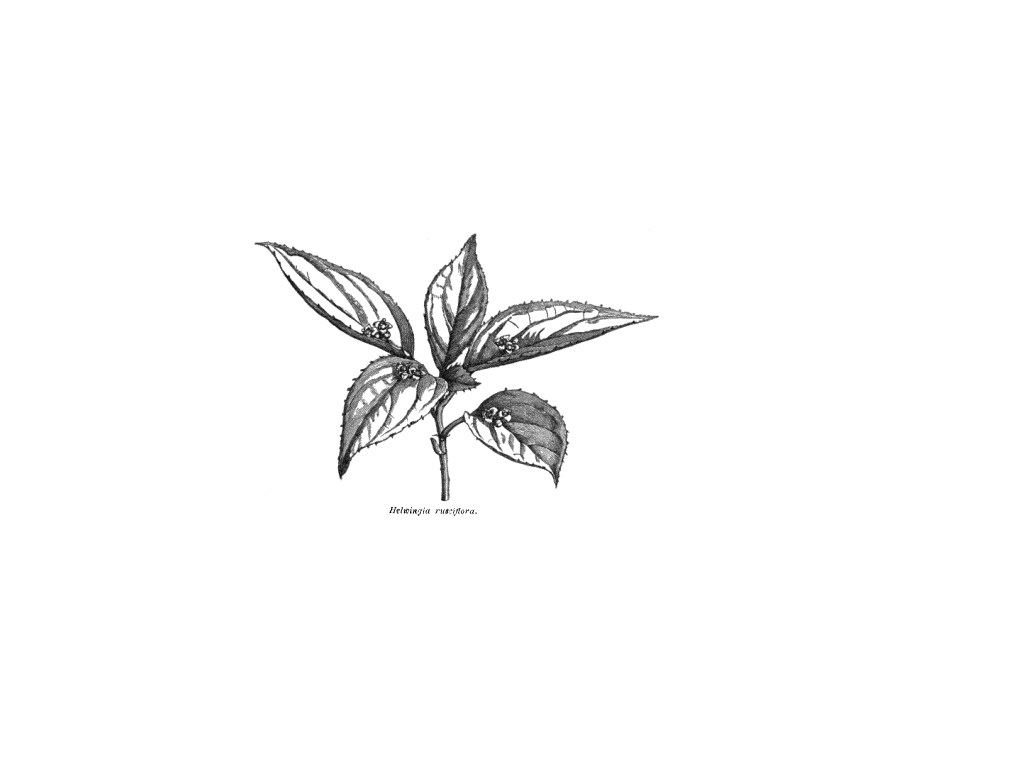
Habit and leaf form. Glabrous shrubs. Leaves alternate (to subopposite); spiral; petiolate; simple. Lamina entire; ovate lanceolate, or ovate; pinnately veined; cross-venulate. Leaves stipulate (the stipules often branched). Stipules intrapetiolar (on the petiole); free of one another; caducous. Lamina margins serrate (serrulate).
Leaf anatomy. Stomata present; mainly confined to one surface (abaxial); anomocytic.
Lamina without secretory cavities. The mesophyll without calcium oxalate crystals. Minor leaf veins without phloem transfer cells.
Stem anatomy. Secretory cavities absent. Internal phloem absent. Secondary thickening developing from a conventional cambial ring. `Included' phloem absent. Xylem without fibre tracheids; with libriform fibres (occasionally septate). Vessel end-walls scalariform. Wood parenchyma apotracheal.
Reproductive type, pollination. Dioecious.
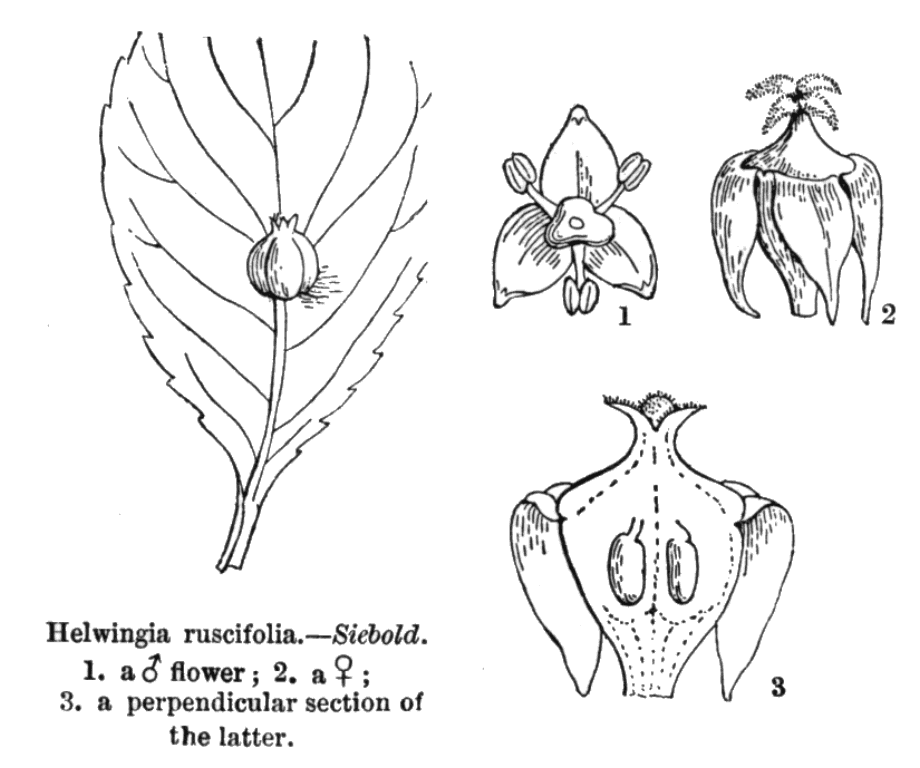
Inflorescence, floral, fruit and seed morphology. Flowers aggregated in `inflorescences'; in umbels. Inflorescences epiphyllous (from the upper side of the midrib); small epiphyllous umbels, the male flowers sometimes long pedicellate, the females shortly so. Flowers small; regular; 3-4(-5) merous; cyclic. Free hypanthium absent.
Perianth petaline (as described by Airy Shaw); 3-4(-5); 1 whorled. Corolla 3-4(-5); 1 whorled; polypetalous; valvate.
Androecium 3-4(-5). Androecial members free of the perianth; free of one another; 1 - whorled. Androecium of male flowers, exclusively of fertile stamens. Stamens 3-4(-5); isomerous with the perianth; (theoretically) oppositisepalous (alternating with the petals); filantherous (inserted outside the flat angled disk). Anthers dehiscing via longitudinal slits; introrse. Pollen grains aperturate; 3 - aperturate; colporate.
Gynoecium 3-4. Carpels reduced in number relative to the perianth to isomerous with the perianth. Gynoecium syncarpous; synstylovarious; inferior. Ovary 3-4 locular. Epigynous disk present (passing into the style). Gynoecium stylate. Styles 1; apical; shorter than the mature ovary. Stigmas 3-4 (recurved). Placentation apical. Ovules 1 per locule; pendulous; apotropous; anatropous.
Fruit fleshy; indehiscent; a drupe (with 3-4 pyrenes); 3-4 seeded. Seeds endospermic. Embryo well differentiated (small). Embryo straight.
Physiology, biochemistry. Iridoids absent.
Geography, cytology. Holarctic. Temperate. Eastern Himalayas to Japan and Formosa.
Taxonomy. Subclass Dicotyledonae; Crassinucelli. Dahlgren's Superorder Araliiflorae; Araliales. Cronquist's Subclass Rosidae; Cornales. Takhtajan's Subclass Rosidae; Aralianae; Cornales. Species 5. Genera 1; only genus, Helwingia.
Illustrations. helwi473.gif helwi296.gif