Excluding Stylobasiaceae
Habit and leaf form. Shrubs. Xerophytic (coastal). Leaves small to medium-sized; alternate; spiral; `herbaceous', or leathery (?); petiolate to sessile; non-sheathing; simple. Lamina entire; acicular, or oblanceolate; one-veined, or pinnately veined (?); cross-venulate (?); attenuate at the base. Leaves exstipulate. Lamina margins entire.
Leaf anatomy. Stomata present; on both surfaces; anomocytic, or anisocytic.
Stem anatomy. Secretory cavities present, or absent. Secondary thickening developing from a conventional cambial ring. Xylem with libriform fibres. Vessel end-walls simple. Wood storied; parenchyma apotracheal and paratracheal.
Reproductive type, pollination. Hermaphrodite.
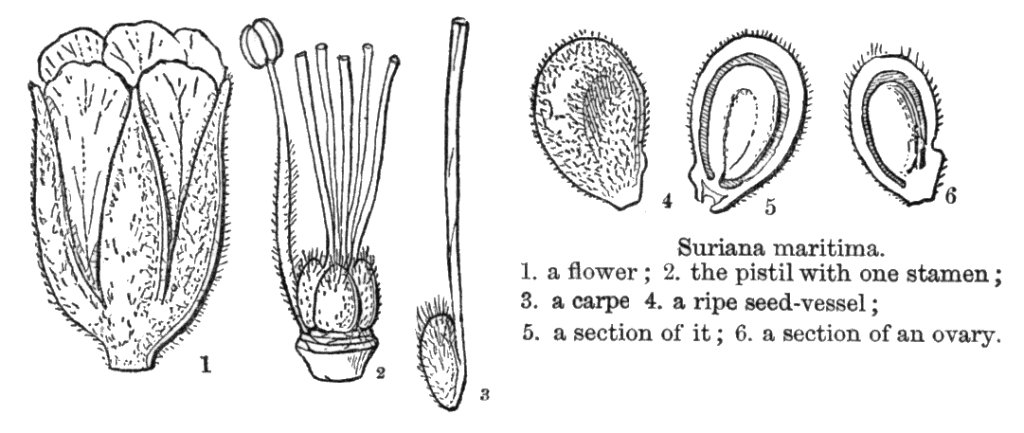
Inflorescence, floral, fruit and seed morphology. Flowers aggregated in `inflorescences'; in cymes. The terminal inflorescence unit cymose. Inflorescences axillary; few flowered cymes. Flowers bracteate (the bracts large); bracteolate; small; regular; 5 merous; cyclic; pentacyclic. Free hypanthium present (inconspicuous), or absent. Hypogynous disk absent.
Perianth with distinct calyx and corolla; 10; 2 whorled; isomerous. Calyx 5; 1 whorled; gamosepalous (below, the lobes acuminate); regular; persistent; imbricate. Corolla 5; 1 whorled; polypetalous; imbricate; regular; yellow. Petals shortly clawed.
Androecium 10. Androecial members free of the perianth; markedly unequal (the inner shorter); free of one another; 2 - whorled. Androecium exclusively of fertile stamens, or including staminodes (the inner members often sterile or abortive). Staminodes when present, 5; non-petaloid. Stamens 5, or 10; isomerous with the perianth, or diplostemonous; oppositisepalous (the inner whorl oppositipetalous). Anthers dorsifixed; versatile; dehiscing via longitudinal slits; introrse. Pollen grains aperturate; 3 - aperturate; colporate (or colporoidate).
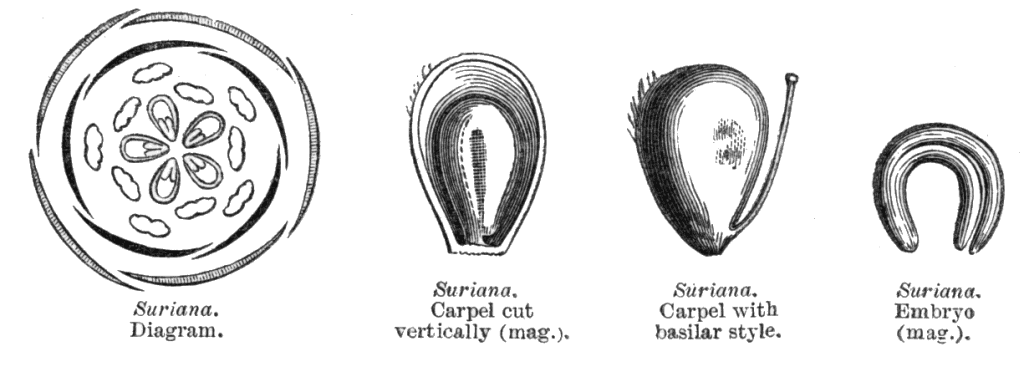
Gynoecium 5. Carpels isomerous with the perianth. Gynoecium apocarpous; eu-apocarpous; superior. Carpel stylate; with a gynobasic style; 2 ovuled. Placentation (sub-) basal. Ovules funicled; ascending; collateral; non-arillate; anatropous; bitegmic; crassinucellate. Outer integument not contributing to the micropyle. Embryo-sac development Polygonum-type. Endosperm formation nuclear. Embryogeny onagrad.
Fruit fleshy; multiple (of 3-5 carpels). The fruiting carpel indehiscent; drupaceous. Seeds non-endospermic. Cotyledons 2 (usually thickened). Embryo curved (hippocrepiform).
Physiology, biochemistry. Not cyanogenic. Proanthocyanidins present, or absent. Ellagic acid absent. Saponins/sapogenins absent.
Geography, cytology. Tropical. Coasts of Atlantic tropical America, tropical East Africa, Madagascar, Mascarenes, Indian Ocean Islands, Ceylon to Malay Peninsula, Eastern Malaysia, Northeast Australia, Formosa, Philippines.
Taxonomy. Subclass Dicotyledonae; Crassinucelli. Dahlgren's Superorder Rutiflorae, or Rosiflorae (?); if Rosiflorae Rosales; if Rutiflorae Rutales. Cronquist's Subclass Rosidae; Rosales. Takhtajan's Subclass Rosidae; Rutanae; Rutales. Species 1. Genera 1, or 3; Suriana (some Simaroubaceae may also belong here - Cadellia and Guilfoylia, with stipulate leaves, also Recchia).
This description based on Suriana only.
Illustrations. suria509.gif suria327.gif