SEARCH
Home > CANBR > Programs > HA
Systematics and Evolution (HA)
Systematics & Phylogenetics
    
Major Plant Groups:
    - Asteraceae
    - Bryophytes
    - Caryophyllales
    - Mimosoideae
    - Orchidaceae
    Smaller Systematics projects

Electronic Identification Tools
    Euclid (Eucalypts)
    Flowering Plant Families
    Rainforest Plants
    Orchid Genera
    Pea Flowers
    Grevillea

Environmental Weeds
    Salix (willows)
    Invasive Ecology

Phenological Studies
    Flowering time / climate change

Conservation Projects
    Bulahdelah orchid translocation

Murray-Darling Basin Ecology
    Water for a Healthy Country

CERF Project (TRIN)
    Taxonomy Research & Information


            Programs (top)
            HA   HB   HC   HD
CSIRO
ANBG
DNP
Systematics and Evolution (HA)

Leucochrysum albicans
(click to enlarge)

Asteraceae

Project Leader: Alexander Schmidt-Lebuhn

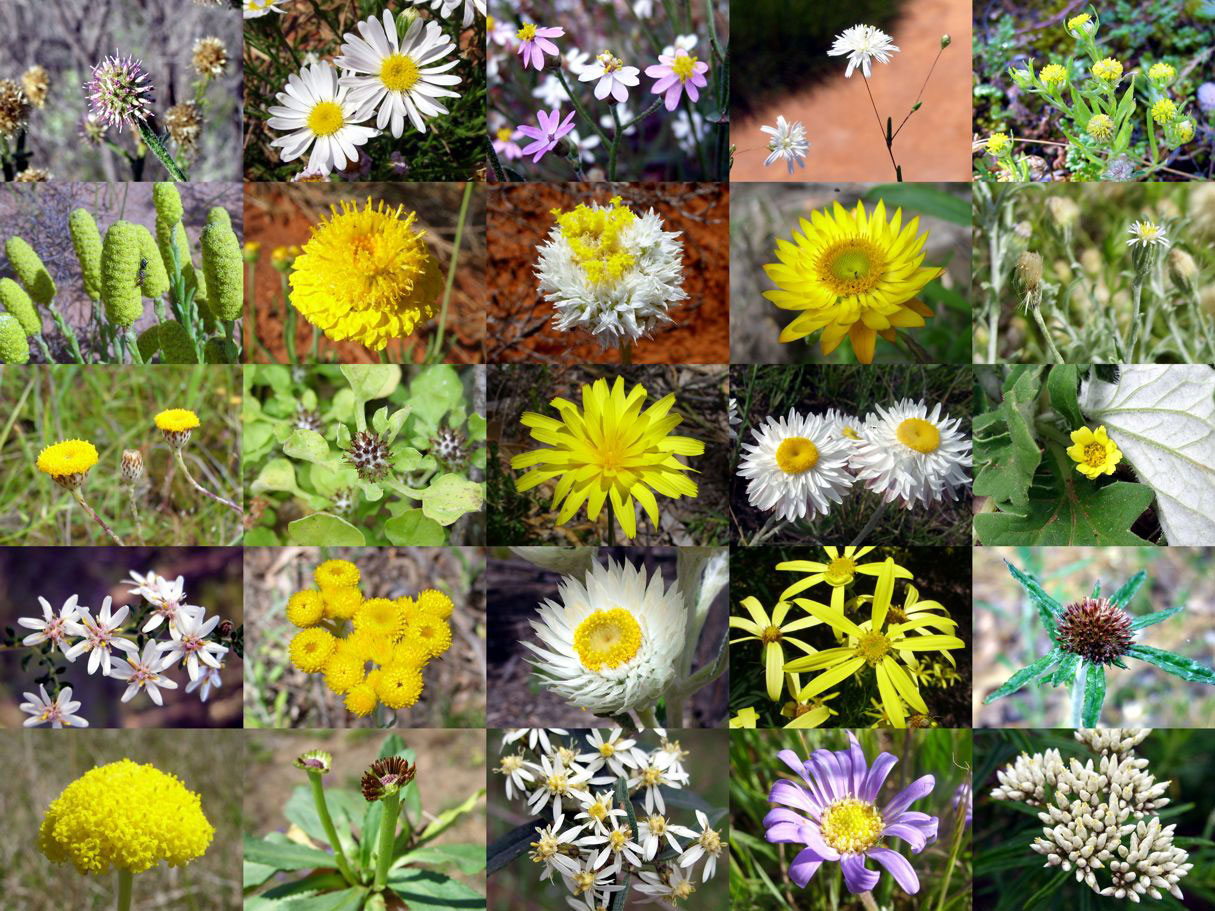
The daisy family (Asteraceae or Compositae) is the largest of all plant families with an estimated 20,000 to 25,000 species worldwide. From a human perspective, it is highly relevant because it includes economical, culinary or medical plants such as murnong, sunflower, marigold, lettuce, chicory, artichoke, chamomile, absinthe and tarragon as well as numerous ornamentals, but also a great number of weedy representatives. The daisies are represented in Australia with ca. 1,000 native species, constituting an important part of plant biodiversity especially in arid and alpine habitats. In addition, there are ca. 200-300 introduced species, a higher percentage than for most other plant groups, and several of them are declared noxious weeds.

2012 Report

In 2012, research in the Asteraceae project was again methodologically diverse. Spatial studies continued in collaboration with Carlos González-Orozco, Nunzio Knerr and other colleagues and resulted in the publication of an analysis of species richness and collecting completeness in the Journal of Biogeography. An innovative study of the collecting biases of field botanists was completed and submitted for publication, and another manuscript on phylogenetic diversity is in preparation.

In the summer of 2011/12 CSIRO Plant Industry summer student Lee Constable participated in a phylogenetic analysis of Cassinia and Ozothamnus , the first comprehensively sampled study of these two large shrubby genera representing together nearly 10% of the native daisy flora. The resulting manuscript is already in press, and although more detailed research is clearly needed the study will soon lead to the first taxonomic changes.

Systematic research on the billy button genus Craspedia continues. Two seasons worth of crossing experiments have been conducted, predominantly by Cathy Miller, and molecular and cytological work is underway to increase our understanding of the group's evolutionary history and speciation processes. In the summer of 2012/13 summer student Kirsty Milner participated in the work on Craspedia by composing a comprehensive morphological dataset for a test of species delimitations and the formulation of a morphology-based phylogenetic hypothesis. The resulting publication is in preparation.

Notable field work in 2012 was conducted in Tasmania as part of the ABRS Bush Blitz rapid biodiversity assessment program and in Western Australia as extension of a conference trip. Both field trips resulted in the collection of numerous Asteraceae samples, expanding the National Herbarium's coverage of Asteraceae and providing specimens and molecular samples for future studies in this project.

^ CSIRO Canberra
* Tropical Herbarium, Cairns
# SEWPaC (ANBG)
(PDF) = Postdoctoral Fellowship
(HRF) = Honorary Research Fellows
(PhD) = Graduate Students

Scientific and Technical Staff

PROJECT LEADER

Alexander Schmidt-Lebuhn ^

STAFF, HONORARY ASSOCIATES & STUDENTS

Dave Mallinson # (Asteraceae curator)
Cathy Miller ^

Contact us | Copyright and public access | Privacy Statement | Sitemap | Last updated20 October, 2011->->->--> , webmaster, CANBR (canbr-info@anbg.gov.au)
© 2011 Centre for Australian National Biodiversity Research, Canberra. All Rights Reserved