![An Australian Government Initiative [logo]](/images/austgovt_brown_90px.gif)







9 Spiny-headed Mat-rush
Lomandra longifolia
Habitat: Widespread, particularly sandy soilsSeason: All year
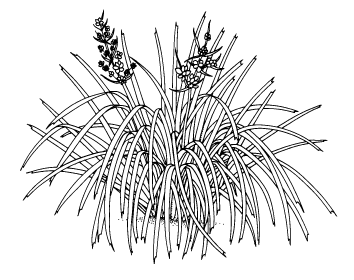 Spiny-headed Mat-rush
Women gathered the smooth strap-shaped leaves from the water's edge to make baskets. They split each rush, tied them in bundles to be soaked allowing the fibres to become pliable for weaving.
The illustration below shows how Aboriginal people used a combination of weirs and basketry traps for fishing.
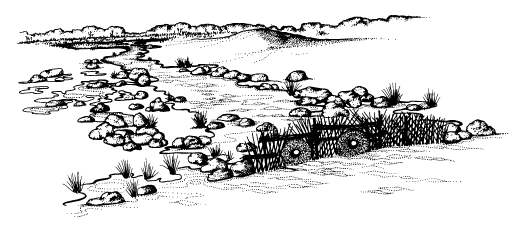
Eel traps made of woven reeds.
Here they have been used with a weir made of sticks and placed across the stream. These traps are fixed in position. Traps can also be held by hand. At Lake Condah, Victoria, Aboriginal people still make these traditional eel traps.
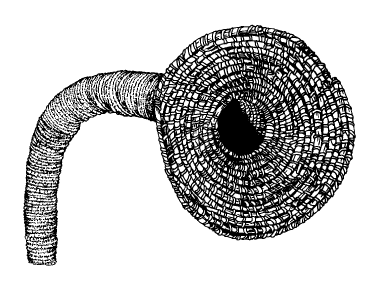
This is a funnelled basket used as an eel trap, made by people from Lake Condah.
Today, people at Lake Tyers, Victoria and Eden, NSW are carrying on their basketry traditions and experimenting with new materials and designs.
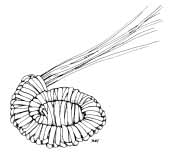
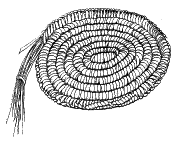
Stages in making a basket.
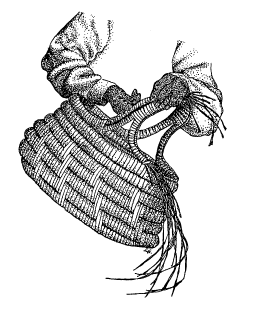
Coiled basket being woven from Spiny-headed Mat-rush at Lake Tyers on the east coast of Victoria.