![An Australian Government Initiative [logo]](/images/austgovt_brown_90px.gif)







5 Roots, bulbs
Roots were important vegetable foods in the south-east. Here you can see some of the plants whose roots were eaten such as, Bulbine bulbosa (Bulbine Lily), Arthropodium milleflorum (Vanilla Lily), Burchardia umbellata (Milkmaid) and Microseris lanceolata (Murnong or Yam Daisy) formerly known as Microseris scapigera.
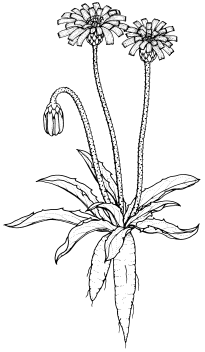 |
Yam Daisy or Murnong |
Yam Daisy was a most important staple food. Women dug the roots with digging
sticks and then roasted them in baskets in an earth oven.
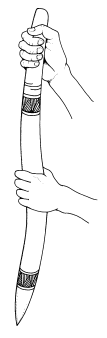 |
Digging stick made from wattle wood and used by women to dig up roots and tubers. |
Dig for some roots! You are turning over the soil and thinning out the root
clumps, two ways of encouraging plant production. But remember, don't take
the lot or there'll be none for next time!
Aboriginal people believed that the roots of 'murnong' should not be collected
before the plants flowered. This was probably because during the drier winter
period before springtime flowering, the roots would not be fully developed.
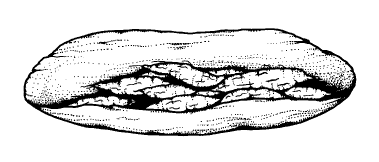
Yam Daisy roots collected in bowl made of eucalyptus bark.
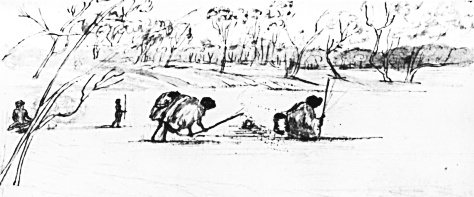
This drawing by J. H. Wedge (1835) shows women digging roots of the Yam
Daisy.
The roots of this plant were an important food source for people
of the Port Phillip area, Victoria.
(Drawing used with permission of the State Library of Victoria).
The roots or underground stems of other plants were also eaten.
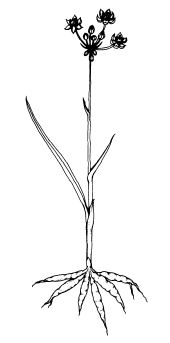 |
Milkmaid. |
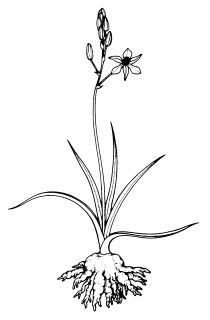 |
Bulbine Lily. |
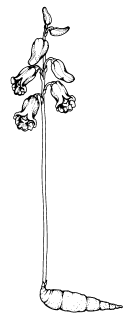 |
Potato Orchid. |